

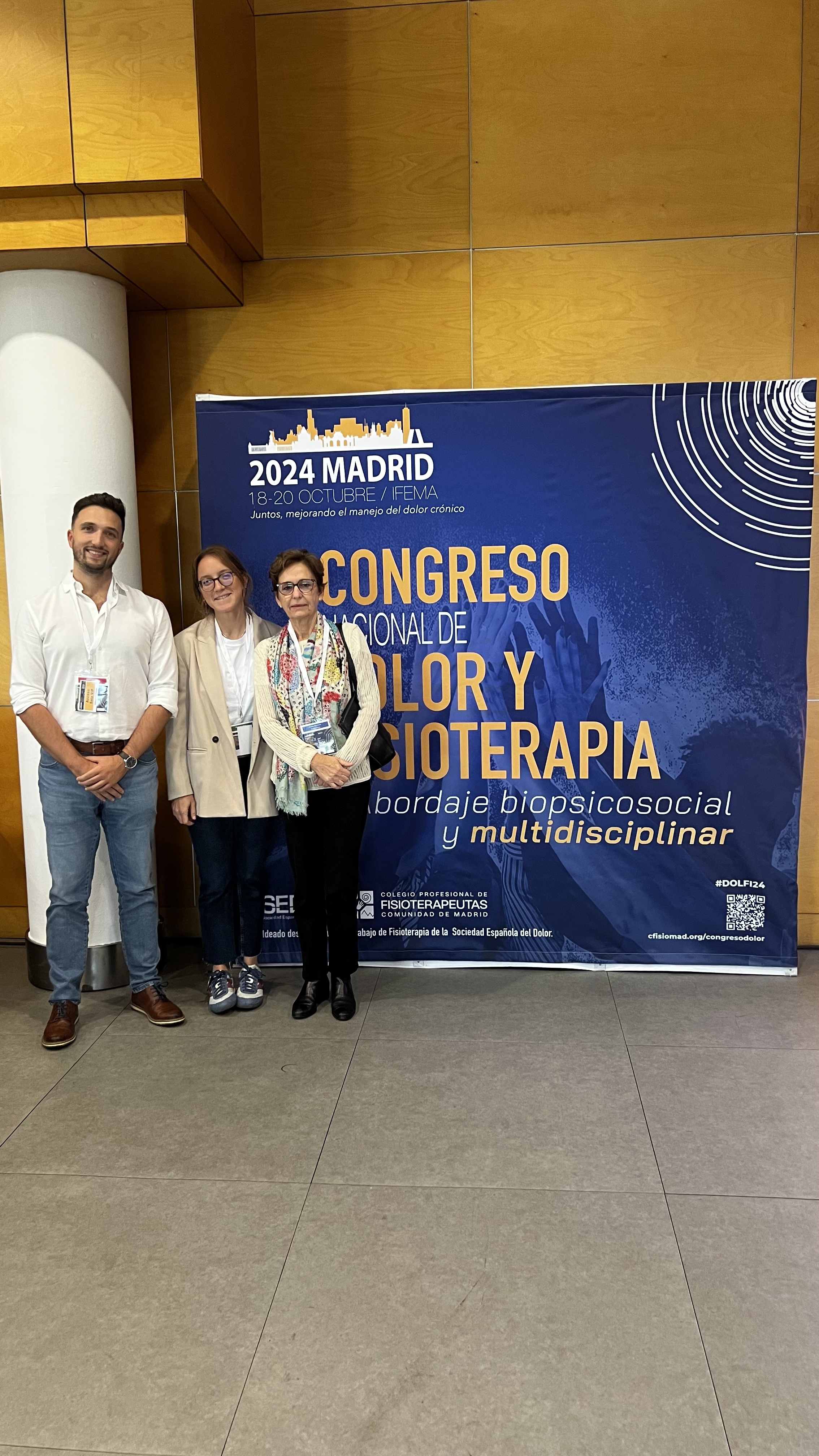
Last weekend, the first National Congress on Physiotherapy and Pain was held at the Madrid Trade Fair Institution (IFEMA), organized by the Professional Association of Physiotherapists of Madrid (CPFCM) in collaboration with the Spanish Pain Society (SED). Over three intensive days, healthcare professionals, young researchers, and national and international experts gathered to share knowledge, present scientific advancements, and explore future lines of research and action.
Under the theme “A unique, innovative, multidisciplinary, biopsychosocial experience from Physiotherapy,” this congress aimed to address the study and treatment of pain from a multidisciplinary perspective, promoting a closer relationship between Physiotherapy and other relevant disciplines. In this context, topics of great interest were presented and discussed, with the attendance of international experts like Kathleen Sluka, Peter Stilwell, Michael Sullivan, and Tamar Pincus, among others.

Messages such as “Pain is not only physiotherapy, but it is nothing without physiotherapy” (Dr. María Maradiaga, president of the SED) and “We are facing a change of era, there is a new way of working, all together to help those who suffer” (Aurora Araújo, dean of the CPFCM) highlighted the significant potential of Physiotherapy and the need to integrate it into the multimodal approach to chronic pain.
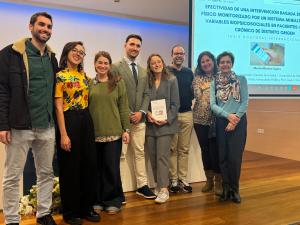
Our team from the Observatory couldn’t miss this event, with three members actively participating in this scientific dissemination forum. Inmaculada Failde was invited as a speaker to discuss gender bias in chronic pain, which stigmatizes, segregates, devalues, and impoverishes society as a whole and even affects research. Professor José A. Moral, a physiotherapist and member of the SED’s Physiotherapy and Pain working group, was part of the congress’s organizing committee and moderated a panel on virtual reality in the context of chronic pain.
Marta Moreno, a physiotherapist and doctoral researcher, presented two communications sharing results from the PainReApp project and her doctoral thesis. The first study aimed to determine the effectiveness of the m-Health PainReApp application compared to a conventional format for guiding a self-directed physical exercise program for patients with chronic low back pain. The second study aimed to identify the multidimensional factors that may influence the progression of pain intensity and quality of life during an intervention based on a self-directed physical exercise program for people with chronic low back pain.
After this enriching experience, we hope this will be the first of many more congresses on Physiotherapy and Pain, giving a voice to Physiotherapy and emphasizing its essential role within the multidisciplinary team in addressing chronic pain.
About Author