


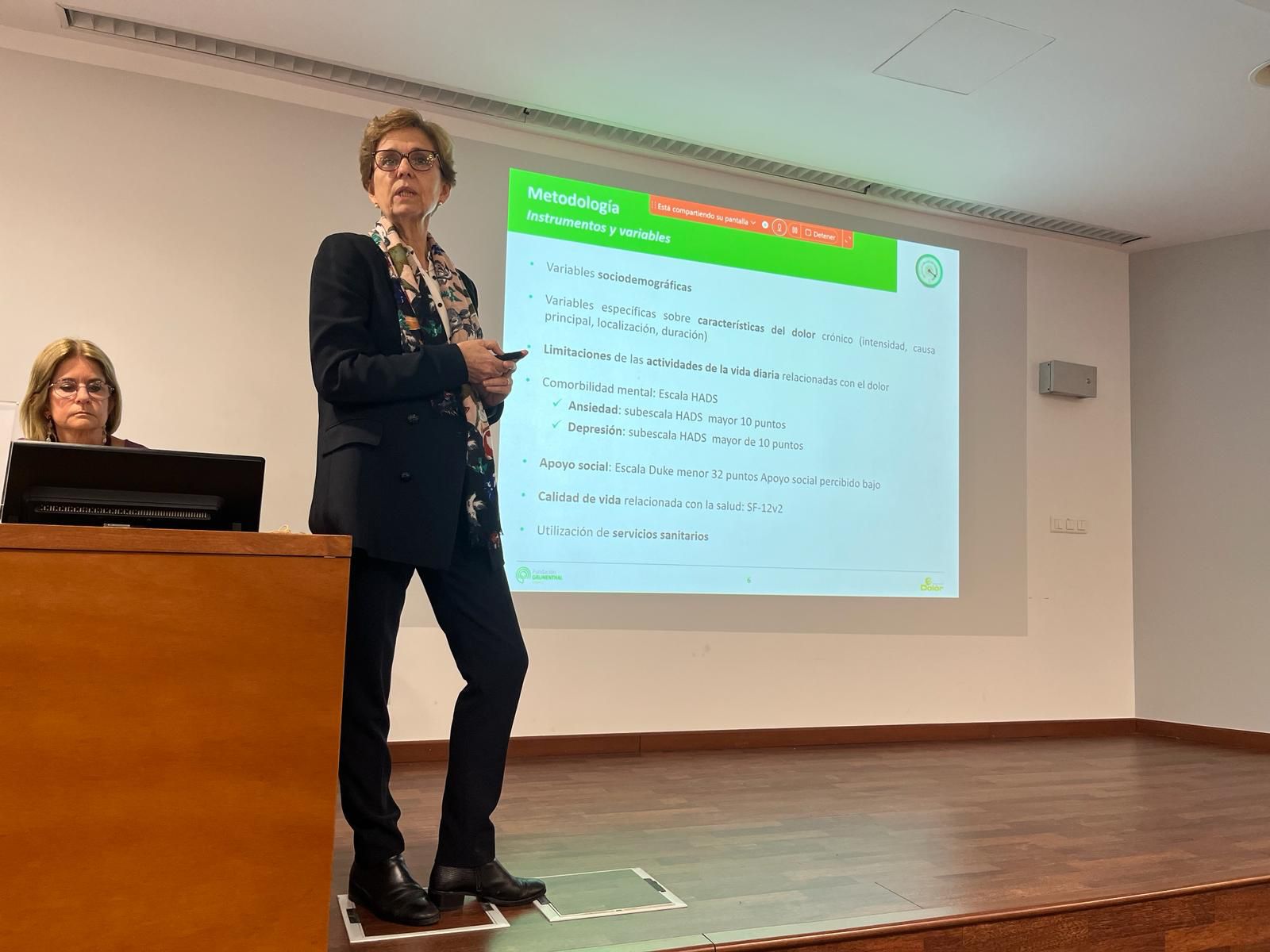
On February 1, the ‘Pain Forum’ took place in Catalonia. An event organized by the Catalan Pain Society, with the collaboration of Grünenthal and the Acadèmia de Ciències Mèdiques i de la Salut de Catalunya i de Balears in Barcelona, which brought together numerous patient associations, scientific societies, as well as healthcare managers and administrators to discuss possible strategies for dealing with pain in Catalonia.
Dr. Inmaculada Failde, Professor of Preventive Medicine and Public Health and Director of the Pain Observatory, was responsible for presenting the report ‘Situation analysis of the impact of chronic pain in Catalonia’, prepared by the Pain Observatory, with the support of the Grünenthal Foundation. This exhaustive study shows that 27.4% of Catalans suffer from chronic pain, making it the third community with the highest prevalence compared to the national estimate (25.9%).
The most frequent diagnostic cause is reported to be low back pain, which affects 60.8% of patients with chronic pain. Muscle contractures (56.6%), neck pain (49.7%) and migraine and chronic headaches (38%) are also common causes of the disease. In 36.2% of the cases, the extremities and/or joints constitute the body region in which chronic pain is mostly located, followed by back pain (21.6%) and generalized pain (16.2%).
On the other hand, the most difficult activity for people with chronic pain is getting up from a chair or bed (63.9%) together with sitting (53.2%) and lying down (51.6%). With regard to professional activities, 31.1% of the total number of Catalan respondents have needed to take time off work because of pain in the last year, and this has lasted for an average of 4.6 months. This need for sick leave has led 33.7% of those affected to abandon or lose their jobs, and 13% have changed their functions as a result of chronic pain. In relation to the use of health services in the last month, 41.8% of the participants with chronic pain in Catalonia had recourse to health services, with primary care being the reference level of care, visited by 82.6% of the patients.
Dr. Inmaculada Failde stressed the need for this type of study “to highlight the importance of chronic pain at a social, economic and healthcare level and to implement actions aimed at improving the quality of life of patients and the approach to the disease”.
About Author